


How to Transition from Dinner to Dancing at a Wedding

Quick Summary
The smoothest way to shift from dinner to dancing is to plan a reception timeline backward from the dance floor open time, limit speeches to a fixed window, and leave a 10 to 15 minute transition window for announcements and lighting changes. Assign one person to give the cue, and open with an upbeat, familiar song.
Build a reception timeline backward from the exact minute the dance floor opens.
Limit speeches to three or four, each running three to five minutes.
Allow a transition window of 10 to 15 minutes between the last plate and the first song.
Add 10 to 15 minutes of buffer, since caterers often run behind schedule.
Open the dance floor with an upbeat, familiar song, not a slow ballad.
Table of Contents
Why the Dinner-to-Dancing Shift Often Stalls
The move from dinner to dancing is where many wedding receptions lose their energy. Guests finish their plates, the room goes quiet, and nobody is sure whether the party has started. A clear plan for this transition is the difference between a dance floor that fills within minutes and one that stays empty for an hour.
Most stalls come from a few predictable problems:
Dinner runs long. Toasts, speeches and course timing push the start of dancing back, and guests lose momentum.
No one owns the transition. When the venue, caterer and DJ each assume someone else will cue the shift, the room waits.
The first song is wrong. A slow or unfamiliar track gives guests no reason to stand up.
Announcements are unclear. Guests who don't know the plan sit back down and wait.
Fixing these problems starts with a reception timeline that treats dinner and dancing as one continuous flow, not two separate events.
Building a Wedding Reception Timeline That Flows
A reception timeline is a minute-by-minute outline of the evening. For the dinner-to-dancing shift, it should show when each speech happens, when food is served and cleared, and when the first dance floor song begins.
A workable timeline usually includes:
Cocktail hour end time: When guests move into the reception room.
Dinner start and service length: How long plates take to serve and clear.
Speech and toast window: A fixed slot, not an open-ended one. Three to four speeches at three to five minutes each fits inside 15 to 20 minutes.
Transition window: The 10 to 15 minutes between the last cleared plate and the first dance floor song, used for announcements, lighting changes and gathering the wedding party.
Dance floor open time: The exact minute the first upbeat song plays.
A sample flow for a 5:00 p.m. reception with a 9:00 p.m. dance floor open looks like this: guests enter at 5:00, dinner is served at 5:30, plates are cleared by 6:30, speeches run 6:30 to 6:50, the transition window runs 6:50 to 7:05, and the first dance floor song starts at 7:05.
Watch out: A timeline with no buffer will fall apart. Build in 10 to 15 minutes of slack before the dance floor opens, since caterers often run behind and a late plate clearance can swallow the entire transition window.
Share this timeline with everyone who touches the evening, so no one is guessing at cues on the day. The timeline should also name who gives the cue to start the first song, because a timeline without an owner is just a wish list.
The table below summarises the reception timeline stages and their typical durations, as described in the article.
Timeline item | Typical timing | Note |
Cocktail hour end | Guests move into reception room | Sets the start of the flow |
Dinner service | Plates served and cleared | Total length depends on service |
Speech and toast window | 15 to 20 minutes | Three to four speeches at three to five minutes each |
Transition window | 10 to 15 minutes | Between last cleared plate and first dance song |
Dance floor open | Exact minute first upbeat song plays | The moment the timeline protects |
Buffer before dance floor open | 10 to 15 minutes | Covers caterer delays |
Step 1: Plan the Transition Window Before the Day
The transition window is the stretch between the last course and the first dance floor song. Plan it before the wedding so it doesn't depend on improvisation. This is also the window where the band or DJ has to switch from dinner music to dance music, so the plan has to cover both the room and the sound.
Setting Dinner Length and Speech Limits
Dinner length sets the pace for everything after it. Most receptions run better when dinner is kept to a set duration and speeches are limited.
Limit speeches to three or four. Each speech should run no more than three to five minutes.
Set a dinner end target. Choose a clear time when plates should be cleared.
Tell speakers the limit in advance. A written note to the best man, maid of honor and parents works well.
These limits protect the energy of the room. A short, well-run dinner gives guests the feeling that the party is moving forward.
Running the Request-to-Performance Workflow
If a live band is playing the dance set, the transition window is the deadline for a workflow that should start weeks earlier. A clear request-to-performance process keeps the band from learning songs at the last minute.
Song selection: The couple picks the opening dance floor song and any must-play songs, and the band confirms which ones it already knows.
Reference recordings: The couple sends a link to the original recording or a live version so the band hears the tempo, key and arrangement the couple expects.
Arrangement approval: For a song the band does not know, ask for a rough rehearsal recording or a short phone demo before the wedding. Approve the arrangement in writing so there are no surprises on the day.
Rehearsal: Most working bands need one to two rehearsals to lock a new song into the set, and they usually want the final song list at least two to four weeks before the date.
Day-of confirmation: The bandleader confirms the cue time with the planner or DJ during setup, not during dinner.
Accounting for Band Size and Instrumentation
A song changes when it moves from a recording to a live lineup. Ask your DJ or bandleader which songs translate cleanly to the performance format and which may need a substitution.
Planning for Contingencies
The transition window is also where backup plans live. Agree in advance on a substitute song if a requested track proves impractical, and a plan for venue restrictions such as a sound curfew or a dance floor that cannot be set up until tables are cleared.
Coordinating With Your Venue, Caterer, and Planner
Dinner-to-dancing transitions fail most often in communication gaps. Give each vendor a copy of the timeline and name one person to make the call.
Venue: Confirm when the room must be ready for dancing and when lights can shift.
Caterer: Agree on when the final course is served and when plates are cleared.
Planner: If you have one, assign them the job of cueing the shift.
DJ or bandleader: Confirm the exact time you want the dance floor to open and who gives the cue.
A planner or coordinator can hold the timeline and give the go-ahead, so the couple can stay focused on the evening itself.
Step 2: Choose Dance Floor Opening Songs That Pull Guests Up
The first song after dinner has one job: get people on their feet. Pick something upbeat, familiar and easy to sing along to. A crowd-pleasing track from the couple's favorite decade often works better than a new release nobody knows.
Good opening songs share a few traits:
A tempo that makes people want to move
A chorus most guests can sing
A clear build that signals the party has started
Avoid starting with a slow ballad or a song with a long, quiet intro. Save those for later in the night, when the room is already dancing.
Step 3: Deliver Clear Wedding DJ Announcements
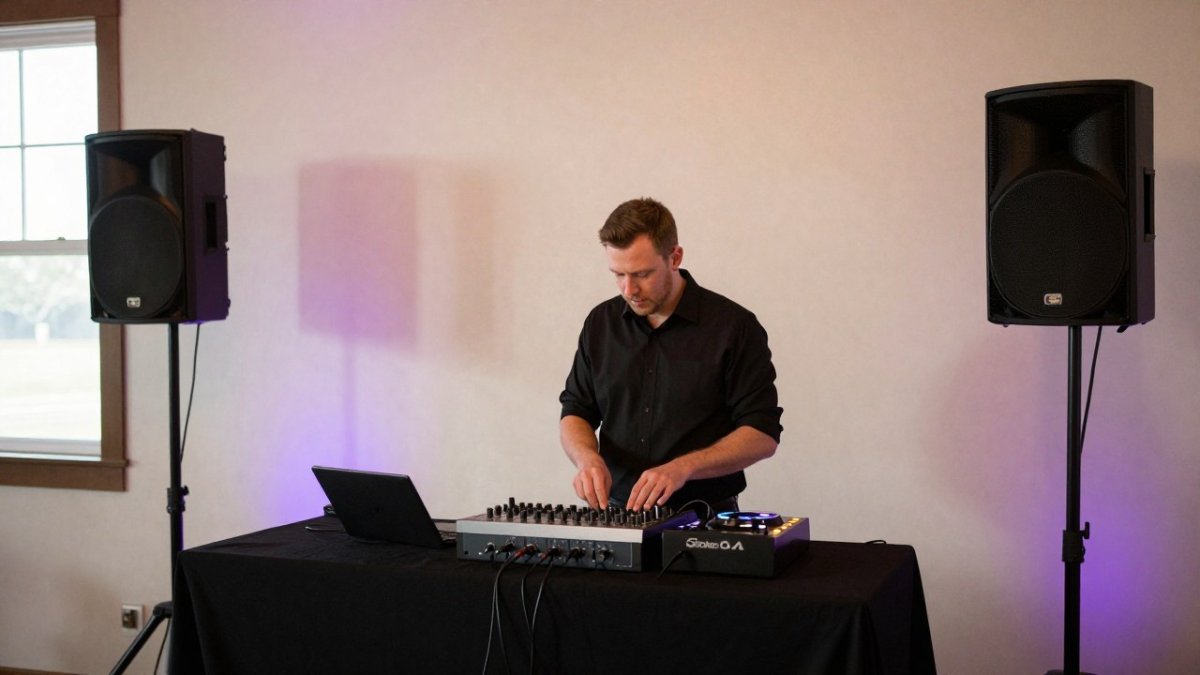
Clear announcements tell guests what is happening and what to do next. A wedding DJ can handle this moment, but the plan should be set before the reception begins.

A good announcement covers three things:
That dinner is ending. A simple line lets guests know the next part is coming.
Where to go. If the dance floor is in a separate area, say so.
What comes next. Invite guests to join the couple on the dance floor.
Keep announcements short and warm. Guests respond best to a clear invitation, not a long explanation. SD Wedding Pro's DJs can handle these cues as part of the reception flow.
Step 4: Get Guests Dancing With Lighting, Pacing, and Participation
Once the first song starts, keep the energy moving. Three tools help most: lighting, pacing and simple participation.
Lighting: Shift the room from warm dinner tones to brighter dance floor colors. Uplighting around the room signals a change in mood, and it's one of the simplest ways to mark the start of dancing.
Pacing: Start with two or three high-energy songs in a row. Then mix in a few crowd favorites to keep guests from sitting down.
Participation: Invite the couple's parents, the wedding party or a group of friends onto the floor first. Once a few people are dancing, others follow.
Watch out: Don't let the energy drop after the first song. A slow track right after the opener can empty the floor in seconds.
Checklist and Mistakes to Avoid in Sioux Falls Receptions
Use this checklist to make the dinner-to-dancing shift smooth:
Reception timeline shared with all vendors
Dinner end time and speech limits set in writing
Venue lighting and room setup confirmed
Opening dance floor song chosen and tested
DJ announcement plan agreed on
Wedding party and family asked to start dancing
Buffer time built into the schedule
Common mistakes to avoid:
Leaving the transition to chance on the day
Letting speeches run past the planned window
Playing a slow song as the first dance floor track
Failing to tell guests where and when dancing starts
Booking Your Reception Timeline With SD Wedding Pro
A smooth dinner-to-dancing shift takes planning, and the right partner makes it easier. SD Wedding Pro builds reception timelines, runs clear announcements and manages lighting and sound so the dance floor opens on cue. Contact us today to check availability and request a quote for your wedding.
Frequently Asked Questions
When should dancing start at a wedding reception?
Most couples open the dance floor about 60 to 90 minutes after guests are seated, once dinner service has wrapped and toasts are finished. Starting too early can leave guests still eating, while waiting too long can drain energy. A good rule is to plan the first dance and the opening dance block to follow the last toast by roughly 10 to 15 minutes, so the room moves from listening to moving without a dead gap. Confirm the exact window with your caterer and venue coordinator before the day.
How long should a wedding dinner last before dancing?
A plated or buffet dinner typically runs 45 to 75 minutes, and toasts add another 15 to 30 minutes depending on how many speakers you have. Build in a short buffer for slow service. For receptions with a 5-hour total timeline, a common pattern is 60 minutes for dinner, 20 minutes for toasts, then dancing. Limiting speeches to three or four people and sharing time limits in advance keeps the transition on schedule.
What should a wedding DJ say to invite guests onto the dance floor?
Keep the announcement short, warm, and specific. For example: "Thank you all for an incredible dinner. The dance floor is now open, so join [couple's names] for their first dance and everyone else is welcome to follow." Name the couple, state the action, and invite everyone to join. Repeat the invitation once after the first song starts and pair it with the opening track so guests hear the cue and the music at the same time.
What songs are good for opening a wedding dance floor?
Opening songs work best when they are familiar, upbeat, and easy to dance to with a steady tempo, usually 110 to 125 beats per minute. Songs with a clear chorus and recognizable hook help guests who are unsure how to start. Pick two or three backup tracks in case the first pick does not land, and mix in a crowd-pleasing song from the couple's shared playlist so the room feels personal from the first beat.
Comments