

5 Best Wedding Reception Music Ideas for 2026

Table of Contents
Why 2026 Wedding Reception Music Looks Different
Building a Wedding Reception Timeline and Music Plan That Flows
Cocktail Hour and Dinner: Setting the Tone
Peak Energy: From First Dance to Last Call
Idea 1: Genre-Blending Sets That Keep Every Generation Dancing
Idea 2: Live Music vs DJ for Weddings in Sioux Falls
What Actually Drives the Cost Difference
The Hybrid Model Most Sioux Falls Couples Actually Book
When a Live Band Is the Right Call
Idea 3: Interactive Wedding Entertainment Ideas That Fill the Floor
The Multi-Generational Balancing Framework
Why Spacing Matters More Than the Gimmick
The Sioux Falls Venue Constraint
Idea 4: A Do-Not-Play List and Custom Mixes That Feel Personal
Idea 5: Technical Sound Planning for Sioux Falls Venues
Conclusion
Frequently Asked Questions
Last Updated: October 2, 2026
Why 2026 Wedding Reception Music Looks Different
Wedding reception music in 2026 is less about a rigid list of hits and more about reading the room in real time. Sioux Falls couples want genre-blending sets, cleaner sound, and a full dance floor from first dance to last call. This guide covers five reception music ideas that work, plus a timeline that keeps the party moving.
Building a Wedding Reception Timeline and Music Plan That Flows
A wedding reception timeline and music plan maps each moment of the night to a specific song or sound cue. Get it right and the evening feels effortless; get it wrong and you're chasing the DJ between courses. Plan music in blocks, not one long list, each block has its own energy target.
Cocktail Hour and Dinner: Setting the Tone
Cocktail hour calls for low-tempo background music that lets guests talk, acoustic covers, soft jazz, or mellow soul. Volume matters more than song choice. During dinner, keep the energy steady but quiet; a common mistake is letting the DJ crank upbeat anthems before anyone has finished eating. In Sioux Falls venues with hard floors and high ceilings, sound bounces, so ask your DJ to keep dinner levels conversational.
Peak Energy: From First Dance to Last Call
Peak energy starts right after the first dance and runs through the last song, where dance floor fillers and crowd pleasers do the heavy lifting. Structure this block in waves:
Warm-up: Motown, classic soul, and singalongs
Build: modern pop and hip-hop crossovers
Peak: 2000s throwbacks and party anthems
Cooldown: love ballads and a final slow song
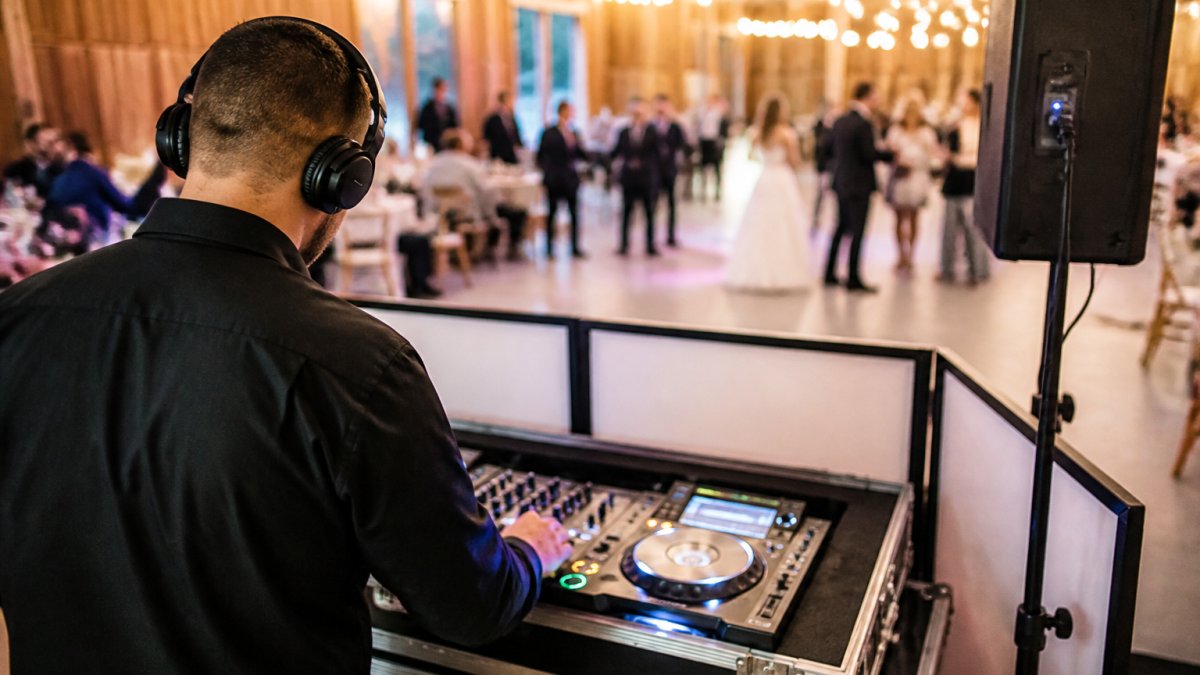
A skilled wedding DJ watches the floor and adjusts tempo in real time, the difference between a set list and a performance.
Idea 1: Genre-Blending Sets That Keep Every Generation Dancing
Pro Tip Request a "no dead air" rule for your reception. A 10-second gap between songs can clear a dance floor faster than a bad track. Professional DJs cue the next song before the current one ends.

Idea 2: Live Music vs DJ for Weddings in Sioux Falls
The live music vs DJ for weddings decision comes down to budget, space, and how much control you want over the set. A live band delivers raw energy and a memorable visual; a DJ delivers flexibility, wider song range, and typically lower cost. In Sioux Falls, venue load-in rules, South Dakota weather, and band travel distance also shape the choice.
Country Gold 2026
Factor | Live Band | Wedding DJ |
Song range | Limited to repertoire | Thousands of tracks |
Setup space | Large stage area, often 16x20 feet or more | Compact booth, often 6x6 feet |
Typical cost | Higher, most regional bands quote a flat show fee plus travel | Lower, most Sioux Falls DJs quote a flat package |
Requests | Hard to accommodate mid-set | Easy to work in |
Sound control | Varies by venue and room | Engineer-managed |
Weather risk | High for outdoor or barn venues | Low, gear is portable and covered |
Load-in | Needs stage, power, and often a 2-hour setup window | Needs one standard outlet and 60-90 minutes |
What Actually Drives the Cost Difference
A live band is a bigger logistics line item, not just a bigger cost. Most regional bands travel with a trailer, need a dedicated power drop, and require a sound check before guests arrive, which means your venue has to allow early access, something not every Sioux Falls space does. Downtown lofts with shared loading docks and historic buildings with freight elevators often cap load-in windows, and a five-piece band can blow through that window before the drums are mic'd.
The Hybrid Model Most Sioux Falls Couples Actually Book
Many couples now combine both: a live trio or solo acoustic act for cocktail hour, then a DJ for open dancing. The hybrid approach gives you the best of each without doubling your entertainment budget, because the live component is short and the DJ carries the four-hour dance block. A common pattern is a two-hour acoustic set during cocktail hour and dinner, followed by a DJ from the first dance through last call.
When a Live Band Is the Right Call
Watch Out Don't book a live band without confirming the venue's stage size, power access, and load-in rules. Bands that show up to a space with no room or no power source create delays that push your whole timeline back. Ask the venue for its certificate of insurance requirements and its noise curfew, most Sioux Falls venues enforce a hard cutoff, and a band that runs long can get your event shut down early.
Pro Tip If you're comparing quotes, ask each band and DJ for a sample timeline from a real Sioux Falls wedding they played in the last 12 months. A vendor who can't produce one is guessing at your venue's logistics.
Idea 3: Interactive Wedding Entertainment Ideas That Fill the Floor
Interactive wedding entertainment ideas turn guests from spectators into participants, giving people a reason to move, laugh, and stay engaged beyond just dancing. Interactivity is not a list of gimmicks, it is a scheduling framework for balancing a multi-generational guest list, the exact problem a Sioux Falls reception with grandparents, college friends, coworkers, and kids at the same tables has to solve.
The Multi-Generational Balancing Framework
A Sioux Falls reception typically spans three or four generations, so a 2026 dance floor has to serve a 78-year-old grandmother, a 45-year-old coworker, a 24-year-old college friend, and a 9-year-old cousin, often in the same hour. Assign each interactive moment to a different generation, then space them across the night so no single age group feels targeted or ignored.
Right after dinner (older guests): Anniversary dance honoring the longest-married couple. This pulls grandparents and parents onto the floor first, which signals to older guests that the night includes them.
Early dance block (all ages): Group dances everyone already knows. These work because the choreography is shared across generations, the same song that a 60-year-old learned at a 1980s wedding is the one a 25-year-old learned on TikTok.
Mid-party (younger guests): A "last one standing" dance-off or a surprise dedication song for a parent or friend. This is the moment the 20-somethings own the floor.
Late party (mixed): Photo booth moments tied to specific songs, or a request line where guests text in songs.
Before the last dance (everyone): A final group moment, a circle, a singalong, or a slow song that pulls every generation back onto the floor.
Why Spacing Matters More Than the Gimmick
Interactive moments work best spaced out: one right after dinner, one mid-party, one before the last dance. Too many gimmicks back-to-back and the night feels like a game show, guests stop dancing because they're waiting for the next scheduled bit. Cap interactive moments at three per reception. The dance floor needs long, uninterrupted blocks of music to build energy, and every interactive moment resets that build.
The Sioux Falls Venue Constraint
Key Takeaway The best interactive moments are not the loudest ones. They are the ones that pull a specific generation onto the floor at the moment that generation was about to sit down. Plan them by age group, not by novelty.
Idea 4: A Do-Not-Play List and Custom Mixes That Feel Personal
A do-not-play list is exactly what it sounds like: songs your DJ must avoid, whether because of an ex, a family joke, or simple taste. It's one of the most underused tools in wedding planning. Pair it with custom mixes for the moments that matter most, your first dance, ceremony exit, and last dance deserve more than a stock track.
Key Takeaway The most memorable receptions aren't the ones with the biggest song lists. They're the ones where the music clearly belonged to that couple. A do-not-play list plus two or three custom edits does more for that than a hundred extra requests.
Idea 5: Technical Sound Planning for Sioux Falls Venues
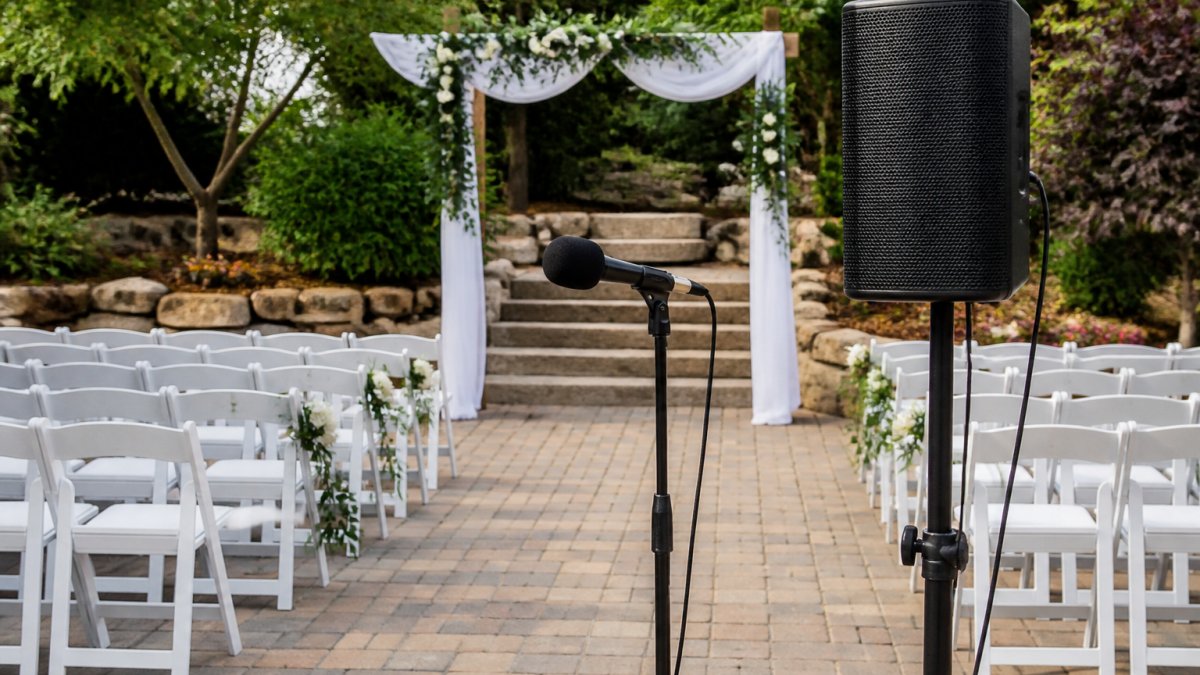
Technical sound planning is the part of reception music most couples never think about until something goes wrong. It covers speaker placement, wireless microphone reliability, and how sound behaves in your venue. A downtown loft with exposed brick and hard floors needs different speaker placement than a barn venue with open air and soft surfaces: brick and glass reflect sound, making speeches muddy, while soft-surfaced spaces absorb sound, making music feel thin.
Before the wedding, ask these questions:
How many wireless microphones are included?
Is there a backup for the ceremony audio?
Who manages sound levels during toasts?
Does the DJ bring their own power and backup gear?
Conclusion
The gap between a good reception and a great one comes down to planning, not luck: music that reads the room, a timeline that flows, and sound that works in your specific venue.
Frequently Asked Questions
What are the top wedding reception music trends for South Dakota weddings in 2026?
Couples in the Sioux Empire are blending genres more than ever, mixing country, pop, and throwback hits so every generation stays on the floor. Personalized do-not-play lists and custom first-dance edits are also rising. A professional DJ who reads the room and adjusts in real time matters more than any single song choice, especially at larger Sioux Falls venues where guest ages span decades.
How far in advance should I book wedding entertainment in Sioux Falls?
Most Sioux Falls couples book their DJ or band 9 to 12 months ahead, especially for peak summer and fall Saturdays. Popular dates in June through October fill first. If your venue is a larger space requiring professional-grade sound and lighting, booking early gives you time to plan a reception timeline and music strategy that fits your specific room and guest count.
How do I balance live music and DJ sets for my reception?
A common approach is live music for cocktail hour or the ceremony, then a DJ for the reception's high-energy portion. Some couples hire a band for a 45-minute set during dinner, then hand off to a DJ for dancing. The key is coordinating transitions so there is no dead air. Your entertainment provider should work directly with your planner and venue to time every handoff.
How can I personalize my wedding reception music in Sioux Falls?
Start with a do-not-play list, then add must-play songs tied to your story, like the track from your first road trip or a song your parents danced to. Ask your DJ to create custom edits, such as a shortened first-dance version or a special entrance mix. Local DJs who know Sioux Falls crowds can also suggest songs that reliably fill the floor at venues similar to yours.
Contact us today to check availability and request a quote

Comments